
AI: Benefits & Limitations

AI isn't a shiny new tool in education anymore. It's turning up in daily admin, in drafting, in the background of decisions principals and boards make every week. The real question for school leaders isn't whether to use it. It's knowing where it adds value and where it has no business being near the decision at all.
The mistake I see, and have made myself, is leaders treating this as all or nothing. Some won't touch it and miss out on genuine time savings. Others use it on everything, including the things that carry real legal, ethical, and relational weight, and that's where schools can get burned.

What leaders need is a simple way to sort tasks so the rules are obvious to everyone, not just the person using the tool. Two questions do the job:
how much judgement does this task need, and how bad is it if something goes wrong?
Plot those two against each other and you get four clear zones.
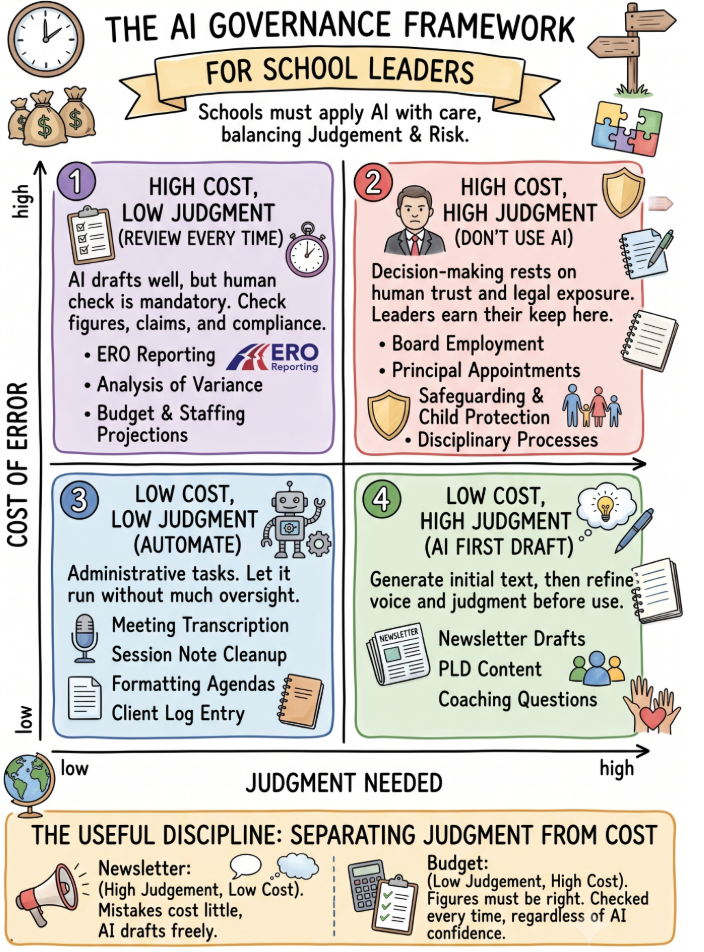
Zone one: keep AI out entirely
High judgement, high cost of error. This is where boards, principals, and senior staff earn their money: employment decisions, principal appointments, stand-downs and suspensions, safeguarding calls, formal disciplinary processes, union or legal disputes.
AI has no empathy, no read on your local community, and no legal liability. Leaning on it for anything that affects a child's future, a staff member's career, or the school's legal position isn't a shortcut, it's a way to lose trust and expose the school to real risk. Keep it right away from these conversations.
Zone two: draft with AI, verify everything
High cost of error, but the task itself follows a formula: ERO reporting, analysis of variance, PGC appraisal documentation, board papers, candidate feedback, budget and staffing projections.
AI can help structure these. What it can't do is guarantee the numbers or the claims are right, because it's built to sound plausible, not to be accurate. A confident-looking budget figure or appraisal summary can be wrong and you won't necessarily spot it by reading it. Every fact, figure, and reference in this category gets checked by a human before it leaves the building. No exceptions.
Zone three: automate it and move on
Low judgement, low cost of error: transcribing meetings, cleaning up rough notes, formatting agendas, summarising long policy documents, turning notes into a client log.
Get this stuff running in the background with light oversight. If something's slightly off, it's a two-minute fix, not a crisis. This is where the real time gets clawed back for the leadership work that actually needs a human.
Zone four: let AI take the first swing
High judgement, but low cost of error: newsletters, PLD session outlines, blog posts, brainstorm structures, first-pass coaching questions.
A blank page is the enemy of getting started. Let AI produce the rough cut, then bring your own judgement to the tone and the detail so it actually sounds like your school when it lands with staff, parents, or students. Getting the first draft wrong here costs nothing. It just gets rewritten.
The point of separating these two questions
A newsletter needs real judgement (tone, nuance, knowing your community) but a mistake in the first draft costs almost nothing. So let AI draft freely and refine it yourself.
A budget projection needs comparatively less creative judgement, it's largely formula and compliance, but getting it wrong is expensive. So even when the output looks polished, someone checks it properly every time.
Once you've got this distinction in place, you stop arguing about whether AI is good or bad in the abstract, and you get a set of rules your staff and board can actually follow.


Comments